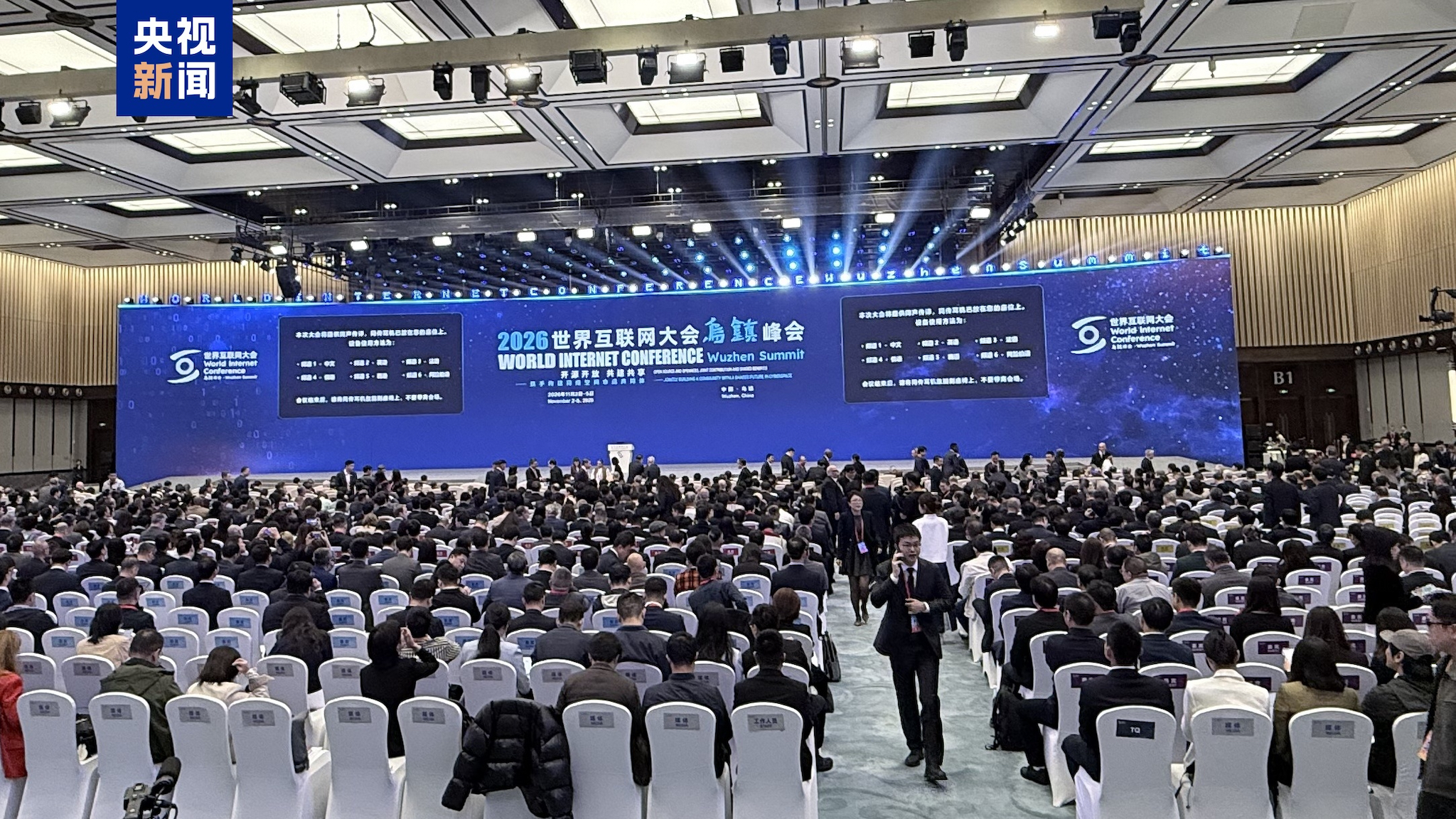
The 2026 World Internet Conference Wuzhen Summit opened on November 3 in the ancient water town of Wuzhen, east China's Zhejiang Province. But the conversation inside the conference halls was anything but traditional. Open source artificial intelligence took center stage, and the message was clear. The future of AI should not be locked behind closed doors. It should be shared, built upon, and made accessible to everyone.
The numbers behind the Wuzhen Summit 2026 open source AI push are hard to ignore. According to data released at the summit, Chinese open source large models have been downloaded more than 10 billion times globally. The country's national-level AI open source communities have attracted over 11 million users. And Alibaba's Qwen series alone has released more than 470 open source models, generating over 4 billion cumulative downloads and more than 330,000 derivative models worldwide.
This is not just a showcase of Chinese technological achievement. It is a deliberate strategy to shape the future of global AI development. While the United States and its allies debate the risks of open sourcing powerful models, China is moving in the opposite direction. It is releasing models freely, building communities, and positioning itself as the champion of open collaboration in a world increasingly divided by tech rivalry.
The Numbers Behind the Open Source Push
The scale of China's open source AI ecosystem is best understood through the data presented at the summit. The following table breaks down the key figures.
| Metric | Figure | What It Means |
|---|---|---|
| Global downloads of Chinese open models | Over 10 billion | Massive adoption across the world |
| National AI open source community users | Over 11 million | A large and active developer base |
| Qwen open source models released | 470+ | Alibaba is a major global contributor |
| Qwen cumulative downloads | 4 billion+ | Widespread use of Alibaba's models |
| Qwen derivative models | 330,000+ | Developers are building on top of the base |
| Summit delegates | 1,800 from 138 countries | Global interest in the open source approach |
The numbers tell a story of momentum. Open source has become a defining feature of China's AI development. The country is not just building models. It is building an ecosystem. And that ecosystem is attracting developers from around the world, including those in emerging markets who may not have the resources to train their own models from scratch.

Why Open Source AI Matters
The term open sourceSoftware or AI models whose underlying code is made freely available for anyone to use, modify, and distribute. is often misunderstood. It does not mean the model is free of rules or risks. It means the building blocks are available for anyone to inspect, improve, and build upon. This approach has advantages and disadvantages.
The advantage is speed. When thousands of developers can work on the same model, improvements happen faster. Bugs are found and fixed more quickly. New applications are built on top of the base model, creating a rich ecosystem of tools and services. Alibaba's Qwen series is a perfect example. With 470 open models and 330,000 derivative models, the company has created a foundation that others can build on.
The disadvantage is control. Once a model is open sourced, it can be used by anyone, including bad actors. This is why the United States and some European countries have been more cautious about releasing powerful models openly. They worry about security risks and the potential for misuse. As we covered in our article on rogue AI agents and security, the risks of AI misuse are real and growing.
But China is betting that the benefits outweigh the risks. By making models accessible to developers in Africa, Southeast Asia, and Latin America, China is building goodwill and influence. It is positioning itself as a partner to the Global SouthA term used to describe developing countries in Africa, Asia, and Latin America., offering them tools to build their own AI applications without relying on expensive proprietary models from American tech giants.
AI Governance and the Global Conversation
The Wuzhen Summit was not just about releasing models. It was also about AI governanceThe rules, policies, and institutions that guide the development and use of artificial intelligence.. Delegates from 138 countries discussed how to ensure that AI is developed responsibly and used for the benefit of all. Chinese officials emphasized the need for international cooperation and shared innovation in cyberspace.
This is a tricky conversation. Different countries have different values and priorities. The United States focuses on security and competition. The European Union focuses on privacy and regulation. China focuses on development and access. Finding common ground is difficult. But the fact that 1,800 delegates from 138 countries gathered to discuss these issues is a sign that the world recognizes the need for dialogue.
The open source approach is central to China's vision of AI governance. By sharing models, China argues that it is democratizing access to AI and preventing a small number of companies from controlling the technology. Whether the world agrees with this vision is another matter. But the Wuzhen Summit made it clear that China is not waiting for consensus. It is moving forward with its own strategy.
What This Means for the Global Tech Industry
The open source AI push has major implications for the global tech industry. For companies like OpenAI and Anthropic, which have invested billions of dollars in proprietary models, the rise of high quality open source alternatives is a competitive threat. If developers can use a free model from Alibaba or DeepSeek that performs almost as well as a paid model from a US company, they may choose the free option.
This is already happening. Some developers in emerging markets are building applications on top of Qwen and DeepSeek instead of paying for API access to closed models. As we explored in our coverage of the AI model race between OpenAI and Anthropic, the competition is intense. The open source movement adds another dimension to that competition. It is not just about who has the smartest model. It is about who has the largest ecosystem and the most accessible tools.
For businesses, the open source trend offers both opportunities and challenges. On the one hand, they can access powerful AI tools at a lower cost. On the other hand, they need to ensure that the open source models they use are secure and reliable. As we discussed in our article on the enterprise AI readiness gap, companies are already struggling to get value from the AI they deploy. Adding open source tools to the mix increases the complexity.
For the broader industry, the Wuzhen Summit signals a shift. AI is no longer just a technical challenge. It is a geopolitical one. The countries that control the most widely used AI models will have significant influence over the global economy and the rules that govern cyberspace. China is making a clear play for that influence with its open source strategy. The United States and its allies will need to decide how to respond.
A New Phase in the AI Race
The 2026 Wuzhen Summit was not just another tech conference. It was a statement of intent. China is positioning open source AI as the path forward. It is releasing models, building communities, and courting developers around the world. The numbers are impressive. But the real impact will be measured in the years to come, as the models released today become the foundation for the applications of tomorrow.
The Wuzhen Summit 2026 open source AI push is a reminder that the AI race is not a single track. There are multiple paths, multiple strategies, and multiple visions for the future. The companies and countries that succeed will be the ones that can adapt to this complexity and build bridges across divides. Open source is one such bridge. Whether it leads to a more inclusive AI future or a more fragmented one remains to be seen.