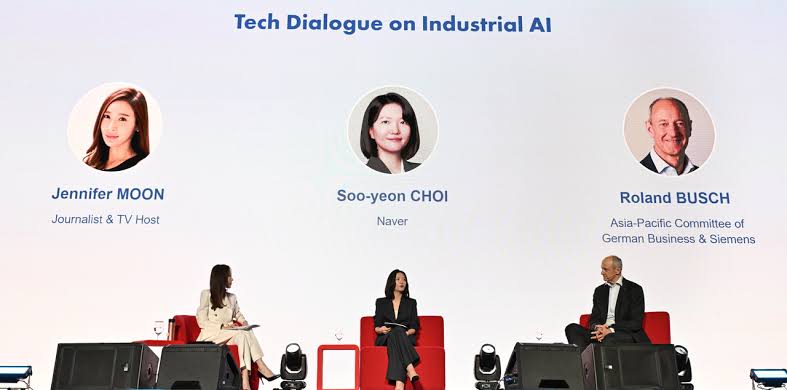
The true tipping point for artificial intelligence in the industrial world will not happen when a giant factory installs a new robotic arm. It will happen when a small machine shop with twelve employees can use the same technology just as easily. That was the core message delivered by Naver CEO Choi Soo-yeon during a special talk with Siemens Group Chairman Roland Busch at the 19th Asia-Pacific Conference of German Business (APK) 2026 in Seoul.
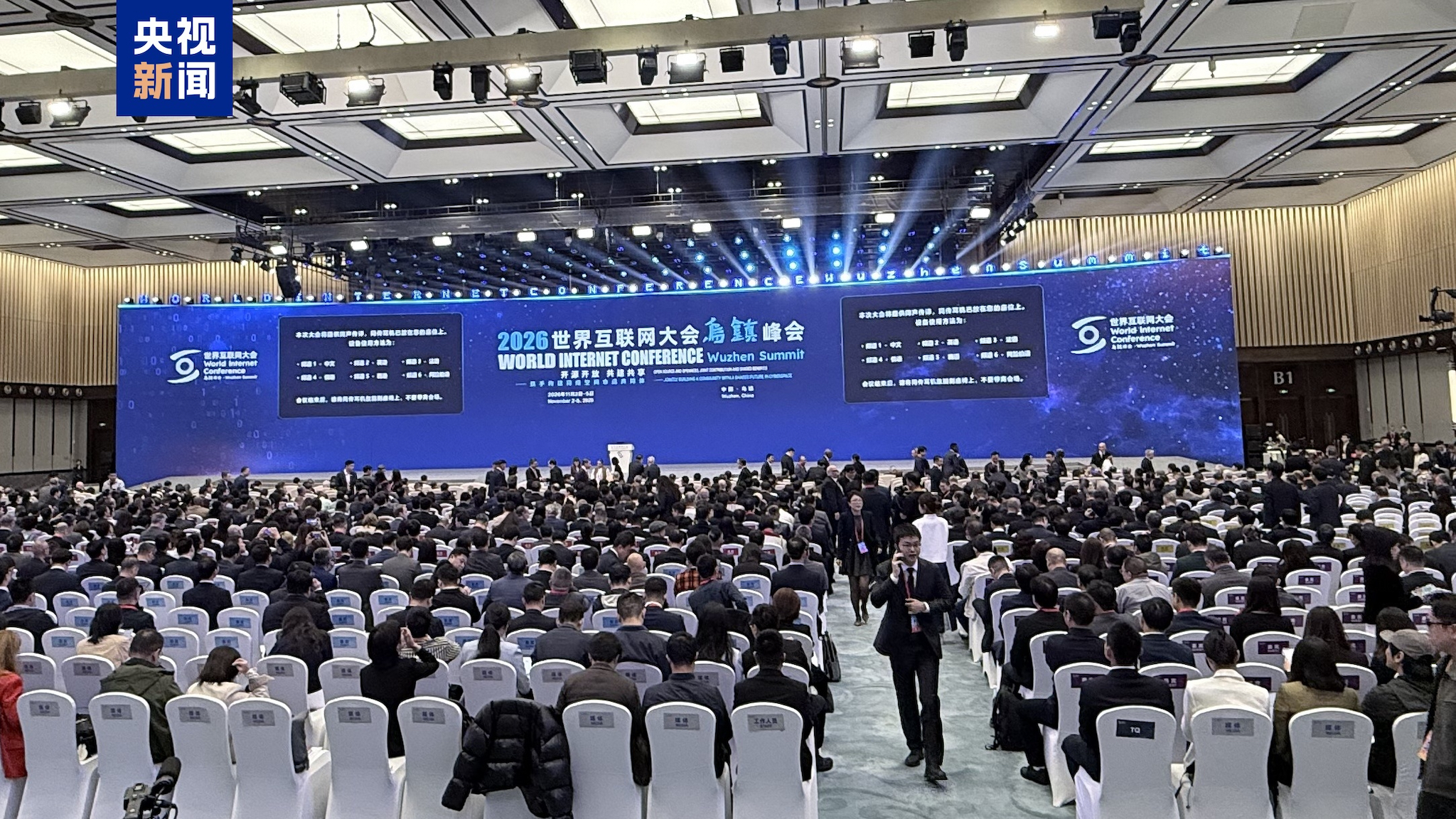
The high-level event, held on October 31, 2026, brought together government officials and business leaders from across Asia and Germany. But the conversation between Choi and Busch was not about high-level strategy or mega-corporations. It was about something much more practical. How do you take powerful AI tools and put them into the hands of small and medium-sized enterprises (SMEs) and partner companies? For Choi, the answer to that question determines whether industrial AI SME adoption becomes a reality or remains a buzzword.
Why Small Businesses Are the Tipping Point
Choi's argument is straightforward. If AI is only used by the biggest companies, the gains will be isolated. A few firms will become more efficient. But the wider industrial ecosystem will not transform. "The true tipping point for AI in industrial settings will come when even small businesses can easily use AI," Choi said during the discussion.
She explained that the foundation for AI use must extend beyond large corporations and reach down into the supply chains. "Only when the foundation for AI use extends to small and medium-sized enterprises and partner companies can the gains of individual companies translate into higher productivity and competitiveness for the industry as a whole," she emphasized.
This is not just a nice sentiment. It is a recognition of how modern industry actually works. A large manufacturer might use AI to optimize its assembly line. But if the company that supplies its parts is still using spreadsheets and manual inspections, the entire supply chain remains slow and inefficient. True industrial transformation requires every link in the chain to participate. For more on how companies are struggling to scale AI at this level, you can read our article on the enterprise AI readiness gap.

The Role of Human Judgment in an AI World
Choi also pushed back against the idea that AI will simply replace human workers. As AI takes on a wider range of tasks, the role of people becomes more important, not less. But the job changes. Humans are no longer the ones doing the repetitive work. They become the ones who verify the results and make the final judgment.
"As the range of work AI performs widens, the role of people who verify its results and make judgments becomes even more important," she said. She also offered a clear definition of what successful AI adoption actually looks like. It is not about the quality of the AI's output. It is about whether the AI solved real problems in the field and how much time and resources were redirected toward more valuable work.
This is a crucial point. Many companies deploy AI and measure success by the number of users or the speed of a specific task. Choi argues that the real measure is impactThe measurable difference AI makes in solving real-world problems and freeing up human time for higher-value work.. If the AI saves five hours a week but those five hours are spent on low-value tasks, the transformation has not happened.
Combining German Engineering with Asian Tech
Roland Busch, the Chairman of Siemens Group, brought a complementary perspective to the conversation. He emphasized that the value of industrial AI is only maximized when it is implemented safely and reliably on the ground, and then scaled across the entire industry.
Busch noted that Germany's strength in traditional industrial engineering and Asia's rapid advancement in semiconductors, AI models, and digital platforms are a natural fit. By combining these strengths, the two regions can usher in a new industrial era. The conversation focused on how to drive innovation by bringing these two worlds together.
Following the discussion, Busch and other Siemens executives visited Naver's 1784 headquarters in Seongnam. They explored opportunities for further cooperation in technologies Naver is developing, including robotics and robotic foundation modelsLarge AI models trained to control robots and help them understand and interact with the physical world.. Naver shared examples of how its digital twin technology is being applied in industrial settings. The two companies discussed ways to combine Naver's digital twins with Siemens' industrial solutions and take them to the global market.
The Data Behind Industrial AI Adoption
The APK discussion comes at a time when industrial AI is growing, but not evenly. Large enterprises are moving quickly, while SMEs are lagging behind. The following table breaks down the key numbers that illustrate this divide.
| Metric | Percentage / Data | What It Means |
|---|---|---|
| SMEs with basic AI awareness | High | Most small business owners know what AI is |
| SMEs with full AI implementation | Low | Very few small businesses have deployed AI at scale |
| Large enterprises scaling AI | 64% | Most large companies are actively rolling out AI |
| Large enterprises optimizing AI | 7% | Only a tiny fraction get full value from their AI |
| Companies citing training as top barrier | 53% | People, not technology, are the biggest obstacle |
The data shows a clear gap. Large companies have the budget, the talent, and the infrastructure to experiment with AI. SMEs often do not. They are focused on day-to-day survival. Asking them to invest in AI requires tools that are easy to use, affordable, and deliver results quickly. This is exactly what Choi and Busch are calling for. The foundation needs to be built so that SMEs can participate without needing a dedicated data science team. For more on the barriers to AI adoption, see our coverage of the Accenture CIO Pulse survey.
What This Means for the Future of Industry
The conversation at APK 2026 was not just a polite exchange of ideas. It signaled a shift in how the biggest players in tech and industry are thinking about the next phase of AI. The first phase was about building powerful models. The second phase was about integrating them into large enterprises. The third phase, which is now beginning, is about making them accessible to everyone else.
If Naver and Siemens can successfully build the infrastructure and the partnerships to make this happen, the impact could be enormous. Factories that once struggled to compete with global giants could suddenly access the same AI-powered insights and automation. Supply chains could become more resilient. And the workforce could be freed to focus on higher-value work, as Choi suggested.
The path forward will not be easy. It requires new business models, new training programs, and new levels of collaboration between tech companies and traditional industry. But the direction is clear. Industrial AI will not reach its full potential until every company, no matter how small, can use it. As the recent market volatility has shown, investors are looking for real value from AI, not just hype. Making AI accessible to the entire industrial ecosystem is one of the clearest paths to delivering that value.